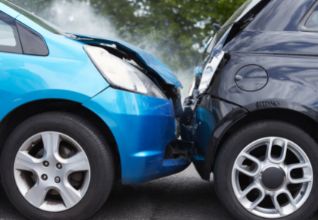
An NCT is every driver’s nightmare. You often think the worse and picture the lengthy repair list and how much it will cost. Nobody wants to fail and have to re-test again.
Previously, we published an NCT Checklist. It outlines everything that will be covered in the NCT and a checklist on how to pass. We have found there are a few common reasons cars fail the NCT. We created this list so that you can fix any of these potential problems before the dreaded NCT day and hopefully save you money.
Most Common Reasons to Fail the NCT
The National Car Test (NCT) is a roadworthiness test that ensures vehicles on Irish roads meet the basic safety standards. Every car on the road in Ireland must undergo an NCT.
Over the past 12 months, over 1.7 million NCTs have been carried out across Ireland, with more than half of vehicles failing on the first attempt. But what are the most common reasons for failing the NCT?
According to NCT annual statistics, reasons for failure fall under two categories: visual defects and non-visual defects. Visual defects are issues that can be seen or identified during a physical inspection of the vehicle. Whereas non-visual defects are issues that show up on the diagnostic and testing equipment.
Most Common Reasons to Fail the NCT: Visual Defects
Visual defects are issues that a tester can spot during the physical inspection of the car. They are found without hooking the car up to the diagnostic testing equipment. Visual defects account for the majority of NCT failures.
Tyres
Tyres are the single most common cause of failure for cars that fail the NCT. In the past 12 months alone, nearly 15% of defects were down to tyres.
There’s an endless list of reasons your car might fail the NCT due to tyres, but the main things that NCT testers look for during a visual inspection are visible damage, worn thread and mismatched or incorrectly sized tyres. Before taking your car for the NCT, you should carry out your own checks and look out for:
- Cuts on the surface or sidewall
- Bulges on the surface or sidewall
- Scratches or cracks on the surface or sidewall
- Tread depth meets the minimum requirements.
- Matching pairs on each axle
If you notice any damage or deterioration to tyres, you should have your tyres replaced as soon as possible. Driving on damaged or worn tyres puts yourself and all other road users at risk.
Additionally, tyres should be inflated to the recommended tyre pressure set by your manufacturer. The air in your tyres helps support the weight of the vehicle, and correctly inflated tyres play an important role in grip, control and fuel efficiency.
You should check your threads before your car goes for an NCT. On your tyre, there is a Tread Wear Indicator. It may be stamped TWI on your tyre. It is essentially a ribbed bar which runs across the tyre. If you find that your tyre threads are level with the ribbed bar, your tyre will need to be replaced.
Keep in mind that Ireland’s legal minimum tyre tread depth is 1.6mm. You should not allow your tyres to get near that number as it is potentially dangerous when driving on roads during bad weather conditions. We recommend always keeping your tyres between 4mm and 8mm.
Most Common Reasons to Fail the NCT: Non-Visual Defects
Non-visual defects are found using specialist diagnostic equipment and check for things like emissions tests, beam alignment, and sideslip and suspension testing. While you can’t always see these faults, they are just as important.
Headlight & Beam Tests
While classified as a non-visual defect because it’s tested for using a computer, the alignment, pitch and direction of your headlights can be a common reason for failure. Misaligned lights can dazzle oncoming drivers or may not properly light the road ahead. When driving, your beams should be level and even to get the best results.
Sometimes, when you try to replace a bulb, issues can arise with headlights, so check the alignment is correct so you can position it appropriately. A mechanic will have this sorted for you in minutes.
Generally speaking, when it comes to your lights, there are a few things you can check for yourself without the help of a mechanic pre-NCT. These include the following:
- Are the lights fully functional?
- Are the lights cracked or damaged?
- Are all the lights working?
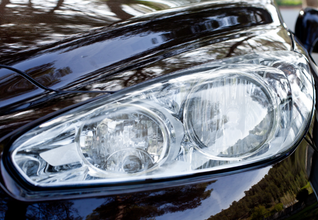
Lastly, check that your brake lights are functional. A helpful way to check if your brake lights are working is to reverse up near a reflective surface and press the brakes. Look in your rear-view mirror to see if they light up. It is also easier to get someone to help with this. Simply press on the brake and ask them to let you know if they light up.
Brake Tests
Even if your brakes pass on visual inspection, they will still need to pass a diagnostic test to measure performance, balance and strength, as well as the same for your handbrake. If your car pulls to one side when you brake, or if the pedal feels spongy, get it checked immediately.
Shock Absorbers
Again, while your suspension is checked visually, there is a diagnostic component that tests for how well these parts control movement. Poor damping can cause instability and longer stopping distances so it’s important that you keep these parts maintained, and replace if needed.
Emissions Testing
During the NCT, they will carry out an emissions test on your vehicle. This test measures the levels of certain pollution-causing gases (petrol) and particulates (diesel) that are emitted from your car. With the results compared against the current EU limits.
High emissions can often be caused by poor maintenance, such as a clogged air filter or a failing catalytic converter. So, get your car serviced regularly and replace oil, air and fuel filters to keep your car in tip-top condition.
Side-Slip Test
The side-slip test checks for overall wheel alignment. It simulates driving on a straight, flat road without touching the steering wheel and measures how far your vehicle would deviate to the left or right over a distance of 1km. Excessive slipping to either side indicates that the wheels are misaligned, affecting stability on the road and tyre wear.
Other Common Reasons to Fail the NCT
Below are some more of the common reasons for failing the NCT. Ahead of their test, drivers should take a couple of minutes to check the items below and make sure they are all working correctly.
Wipers
You will receive an instant fail if you cannot get a clear view of the road ahead. If you have damaged wiper blades or cracked/chipped windscreen, you will fail.
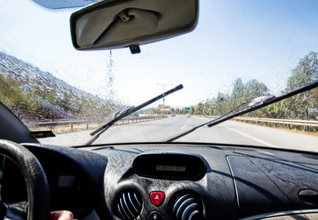
If you have noticed your windscreen wipers are not performing effectively and are hindering your view in the rain, then you should replace them. You can easily replace them yourself, and most insurance policies will include a windscreen cover if your windscreen suffers any damage.
Seatbelts
Your vehicle can potentially fail the NCT if there are obvious issues with your seatbelts. Common reasons for failure here include seatbelts that aren’t working correctly, belts that are cut, ripped or badly frayed, and belts that have been badly repaired.
License Plates
You can potentially fail your NCT if your license plates, front and back, are missing or not clearly visible. Drivers also need to make sure that all letters and numbers are legible and displayed in the correct size and colour before presenting for the NCT.
Horn
Something that drivers often overlook prior to an NCT is the horn. Your car could fail if your horn does not work, is fitted incorrectly or is mounted insecurely.
Like an NCT certificate, holding a valid car insurance policy is essential for driving in Ireland. If you are looking for a competitive quote on your car insurance, get an online quote from us here and see how we compare to your current premium.
Common Reasons to Fail NCT
FAQs
Looking to Save On Your Car Insurance?
At KennCo, our car insurance cover offers competitive rates and valuable benefits, including a replacement car as standard. Get peace of mind knowing you’re fully covered.
Get a Secure Quote Today